 One account. Your whole family connected.
 Pause your kid’s data or send them an SMS in one tap
 Landed with no internet? We’ve still got your back
 Truly unlimited. No caps. No slowdowns.
 Every trip pays off: earn miles on every eSIM


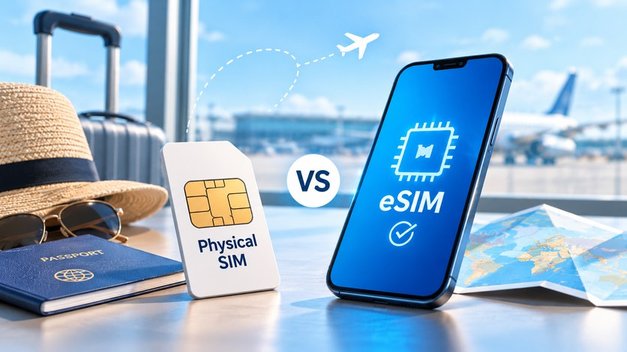
When preparing for an international trip, you have two main mobile connectivity options: a traditional physical SIM card or a digital eSIM. Both allow you to connect to mobile networks, but they differ in how they are installed, managed, and used. Understanding these differences can help you choose the option that best fits your travel needs.
What Is a Physical SIM Card?
A physical SIM card is a small removable card inserted into a dedicated slot in your phone. It connects your device to a mobile network and is usually purchased from a mobile operator or retailer. When traveling abroad, you may need to buy a local SIM card or activate an international roaming package.
What Is an eSIM?
An eSIM is a digital SIM embedded directly into your device. Instead of inserting a physical card, you download a mobile profile and follow the provider's activation instructions. You can purchase a travel data plan online and install it without visiting a store or handling a physical SIM card.
eSIM vs Physical SIM: Key Differences
- Installation: A physical SIM must be inserted into your phone, while an eSIM is installed digitally.
- Purchase: Physical SIM cards are often purchased in stores, while eSIM plans can usually be purchased online.
- Convenience: An eSIM can be set up before departure, so you do not need to search for a SIM card after arriving at your destination.
- Device compatibility: A physical SIM works with devices that have a compatible SIM slot, while an eSIM requires a supported device.
- Plan management: eSIM profiles can be managed through your phone settings, depending on your device capabilities and provider instructions.
Why Choose eSIM for International Travel?
One of the biggest advantages of a travel eSIM is convenience. You can compare available plans, purchase one online, and install it before your trip if your provider allows it. This saves time at the airport and helps you get connected without searching for a local SIM card retailer.
Many compatible smartphones also allow you to keep your regular SIM active while using an eSIM for mobile data. This means you can remain reachable on your usual number while using a separate data plan abroad. However, charges for calls, SMS, and roaming depend on your home operator and device settings.
When Is a Physical SIM Card a Better Choice?
A physical SIM card may be a suitable option if your phone does not support eSIM technology, you prefer a removable card, or a local operator offers a plan that better matches your needs. It is also important to check whether your device is locked to a specific mobile network.
Check Compatibility Before Buying
Before purchasing an eSIM, make sure your phone supports the technology and is unlocked for use with other networks. Compatibility may vary depending on your device model and regional version. Also check the supported countries, data allowance, validity period, and activation requirements of the plan.
Which Option Should You Choose?
If your device supports eSIM and you want to arrange mobile internet before traveling, an eSIM can be a convenient choice. If your phone does not support the technology or you prefer a removable card, a physical SIM may be more suitable. The best option depends on your device, destination, budget, and connectivity needs.
Stay Connected with the Right SIM Option
Both physical SIM cards and eSIMs provide access to mobile networks, but each offers different advantages. Compare the available options before your trip and choose the one that makes staying connected abroad easier and more convenient.